
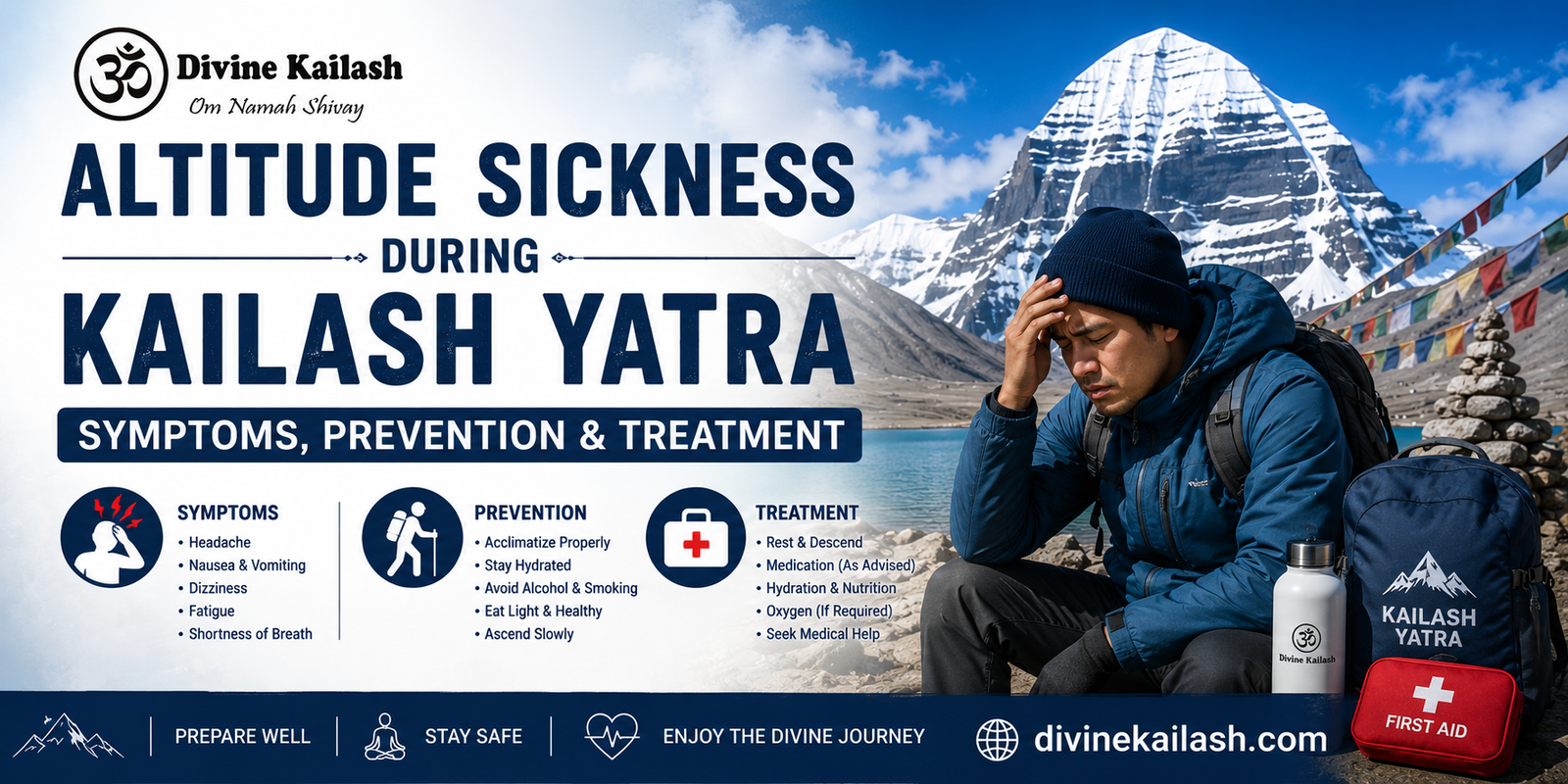
The Kailash Manasarovar Yatra takes pilgrims to some of the highest elevations accessible on foot. Lake Manasarovar sits at 4,590 metres. The Dolma La Pass, the highest point of the Kailash Parikrama, rises to 5,636 metres. At these altitudes, the air contains significantly less oxygen than at sea level, and the human body needs time to adjust.
Altitude sickness, medically called Acute Mountain Sickness (AMS), is not something to take lightly. Each year, pilgrims on the Kailash Yatra experience symptoms ranging from mild headaches to life-threatening conditions. Understanding altitude sickness before you depart can literally save your life.
What Causes Altitude Sickness on the Kailash Yatra?
When you ascend to high altitudes too quickly, your body does not have enough time to adapt to the lower oxygen levels. The result is a series of physiological responses that cause AMS. The faster you ascend, the higher your risk.
On the Kailash Manasarovar Yatra, the ascent is rapid. Many pilgrims travel from Kathmandu (1,400 metres) or Indian cities near sea level and reach Manasarovar (4,590 metres) within a few days. This rapid gain in altitude is the primary cause of altitude sickness on the Yatra.
Symptoms of Altitude Sickness During Kailash Yatra
Mild AMS Symptoms
These are the most common and usually appear within 6 to 12 hours of reaching high altitude:
- Persistent headache, especially behind the eyes or at the forehead
- Fatigue and general weakness
- Dizziness or lightheadedness
- Loss of appetite or nausea
- Difficulty sleeping or very disrupted sleep
- Shortness of breath during mild activity
Mild AMS does not always require descent. Rest, hydration, and not ascending further often resolves it within 24 to 48 hours.
Moderate AMS Symptoms
If mild symptoms worsen or new symptoms appear, you may be entering moderate AMS:
- Severe headache not relieved by paracetamol or ibuprofen
- Persistent vomiting
- Extreme fatigue and inability to walk straight
- Confusion or unusual behaviour
- Reduced urine output
At this stage, descent is often necessary and medical support should be sought immediately.
Severe AMS: HACE and HAPE
Two dangerous conditions can develop if AMS is ignored:
HACE (High Altitude Cerebral Edema): The brain swells due to fluid accumulation. Symptoms include extreme confusion, loss of coordination, inability to walk, severe headache, and eventually unconsciousness.
HAPE (High Altitude Pulmonary Edema): Fluid accumulates in the lungs. Symptoms include breathlessness even at rest, a persistent wet cough, pink or bloody frothy sputum, extreme weakness, and blue lips or fingertips.
Both HACE and HAPE are medical emergencies. Immediate descent and emergency treatment are required.
How to Prevent Altitude Sickness on the Kailash Manasarovar Yatra
Acclimatise Gradually
The most effective prevention is a slow ascent. Do not rush the itinerary. Spend at least one acclimatisation day in Kathmandu, Lucknow, or Nyalam before proceeding further.
The standard rule followed by experienced Himalayan trekkers is: do not ascend more than 300 to 500 metres per day above 3,000 metres.
Stay Well Hydrated
Dehydration worsens AMS symptoms significantly. Drink at least 3 to 4 litres of water daily. Avoid alcohol and smoking completely during the Yatra, as both reduce the body’s ability to acclimatise.
Take Diamox (Acetazolamide)
Diamox is the most widely used medication for altitude sickness prevention. It works by stimulating faster breathing, which increases blood oxygen levels. The standard dose is 125 mg to 250 mg twice daily, starting 24 hours before ascent.
Always consult your doctor before taking Diamox. It is a prescription medication and can cause side effects including frequent urination and tingling in the hands and feet.
Eat Light, High-Carbohydrate Meals
At high altitude, digestion slows. Eat small, frequent meals rich in carbohydrates. Avoid heavy, fatty, or spicy foods during the acclimatisation period.
Monitor Your Blood Oxygen
Carry a pulse oximeter. Normal blood oxygen at sea level is 95 to 100 percent. At 4,500 metres, readings between 80 and 90 percent are common. If your reading drops below 70 percent or you experience symptoms, seek help immediately.
Sleep at Lower Altitude When Possible
Follow the mountaineering principle: climb high, sleep low. If possible, day trips to higher elevations followed by sleeping at a lower camp help the body adjust progressively.
Treatment for Altitude Sickness During Kailash Yatra
For Mild AMS
- Stop ascending immediately
- Rest completely
- Drink plenty of water
- Take paracetamol or ibuprofen for headache relief
- Take Diamox if not already doing so
For Moderate AMS
- Descend at least 500 to 1,000 metres below the elevation where symptoms began
- Administer supplemental oxygen if available
- Take Diamox
- Do not leave the patient alone
For Severe AMS (HACE and HAPE)
- Descend immediately, as even a few hundred metres can be life-saving
- Administer Dexamethasone (for HACE), 8 mg initial dose
- Administer Nifedipine (for HAPE) to reduce pulmonary artery pressure
- Use a portable altitude chamber (Gamow bag) if available
- Evacuate to a hospital as quickly as possible
High-Risk Groups for Altitude Sickness on Kailash Yatra
Certain individuals are at higher risk and should take extra precautions:
- People over 60 years of age
- Those with pre-existing heart, lung, or blood pressure conditions
- Individuals who have experienced AMS on previous high-altitude trips
- Diabetics and those with anaemia
All pilgrims should undergo a medical fitness evaluation before booking the Kailash Manasarovar Yatra.
Travel with Confidence: Choose Divine Kailash
Divine Kailash understands that safety is inseparable from spirituality on the Kailash Manasarovar Yatra. Their packages include pre-departure health briefings, experienced altitude-trained guides, on-ground medical support coordination, and carefully planned acclimatisation schedules across all routes, whether you choose the road route, the Kathmandu route, or the helicopter option.
Travel to Mount Kailash with a team that puts your safety first. Contact Divine Kailash today to plan a safe, well-supported, and deeply meaningful pilgrimage.