
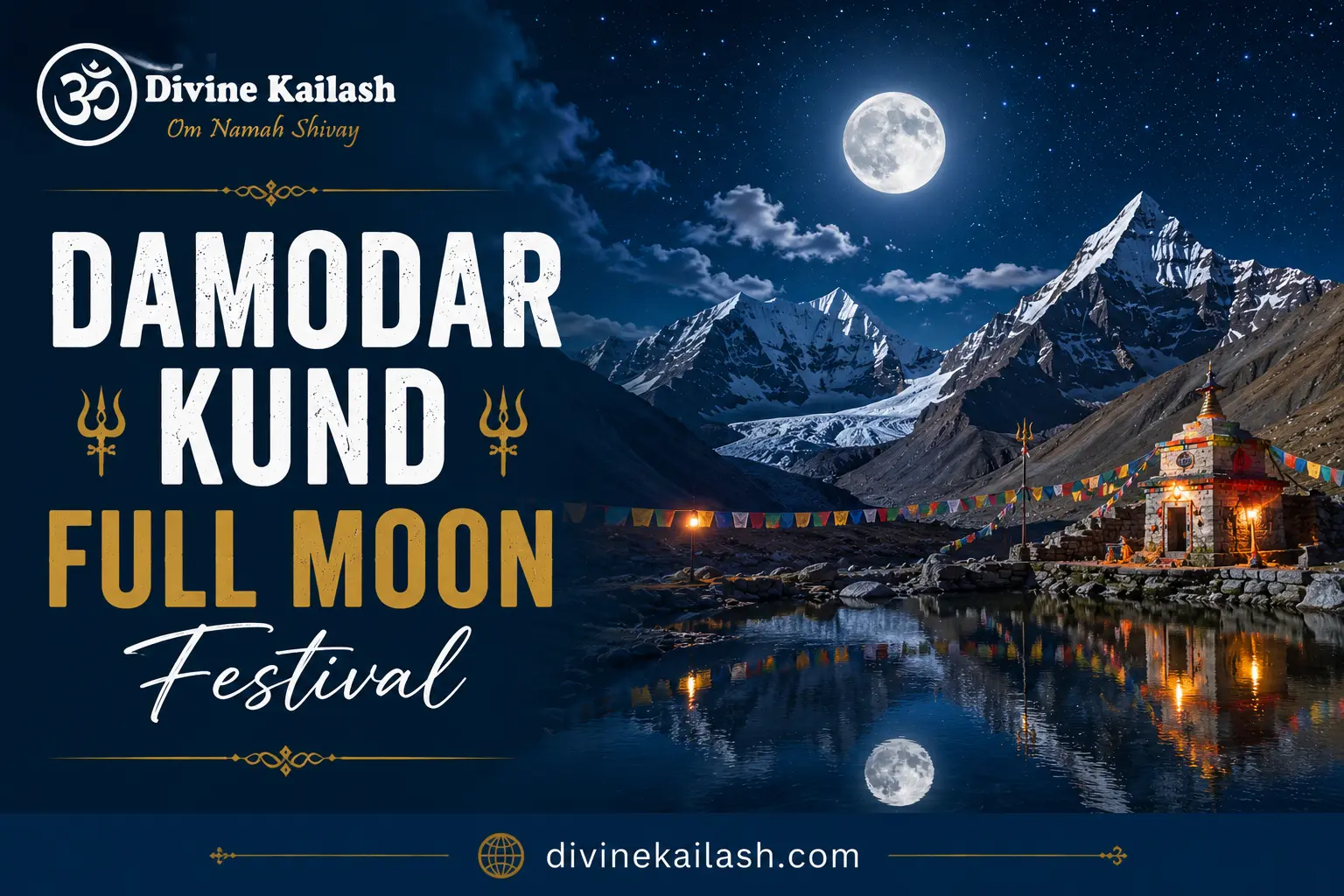
The Damodar Kund Full Moon Festival is an annual Hindu and Buddhist pilgrimage event held at the sacred high-altitude lakes of Damodar Kund in the Upper Mustang region of Nepal. It takes place on the full moon day of the Nepali month of Shrawan, coinciding with Janai Purnima, which in 2026 falls on August 28. Thousands of devotees from Nepal and India climb to the lakes at an altitude of approximately 4,890 meters to perform holy baths, prayers, and ritual offerings. According to Hindu tradition, bathing in Damodar Kund during the full moon cleanses sins from multiple lifetimes and grants moksha, or spiritual liberation.
Key Takeaways
- The Damodar Kund Full Moon Festival is held annually on Janai Purnima, the full moon of Shrawan month, which falls on August 28 in 2026
- The festival takes place at Damodar Kund, a group of sacred lakes in Upper Mustang, Nepal, at approximately 4,890 meters above sea level
- Hindu tradition holds that bathing in Damodar Kund during the full moon washes away sins from multiple lifetimes and grants moksha
- The Damodar Kund Full Moon Festival draws both Hindu and Buddhist pilgrims, reflecting the shared spiritual heritage of the site
- Damodar Kund is the origin of the Kali Gandaki River, the source of sacred Shaligram Stones associated with Lord Vishnu
- Key rituals include sacred bathing (snan), puja, mantra chanting, pradakshina (circumambulation), and offering of flowers and lamps
- The festival is referenced in the Barah Purana, where Lord Krishna himself describes the spiritual power of bathing in Damodar Kund
- The region is also revered by Buddhists as a place where Guru Rinpoche (Padmasambhava) meditated in the 8th century
What Is the Damodar Kund Full Moon Festival?
The Damodar Kund Full Moon Festival is one of the most remote and spiritually intense pilgrimage gatherings in the Himalayas. Once a year, on the full moon night of Shrawan, thousands of Hindu and Buddhist devotees make their way to the high Tibetan plateau of Upper Mustang in Nepal to gather at the sacred lakes of Damodar Kund.
This is not a festival celebrated in a temple courtyard or a city square. It happens at nearly 5,000 meters above sea level, in one of the most restricted and hard-to-reach corners of Nepal, surrounded by the Damodar Himal, the Annapurna range, and the vast Tibetan plateau. The altitude, the cold, and the distance make it a genuine act of spiritual dedication.
The festival is tied to Janai Purnima, Nepal’s major full moon festival in Shrawan month. While Janai Purnima is celebrated across Nepal at sacred rivers, lakes, and temples, the gathering at Damodar Kund is its highest, most ancient, and arguably most powerful expression.
For pilgrims who have completed the Damodar Kund Yatra with Divine Kailash, attending the Full Moon Festival is consistently described as the most spiritually impactful experience of the entire journey.
Festival Overview
| Topic | Details |
| Festival Name | Damodar Kund Full Moon Festival (Damodar Kund Purnima Festival) |
| Also Known As | Janai Purnima at Damodar Kund, Shrawan Purnima Festival |
| Location | Damodar Kund, Upper Mustang, Nepal |
| Approximate Altitude | 4,890 meters (approx. 16,040 feet) |
| Sacred Significance | Holy bath for moksha, sin purification across lifetimes |
| Main Deity | Lord Vishnu (Damodar) |
| Festival Month | Shrawan (Nepali calendar), typically August |
| 2026 Festival Date | August 28, 2026 (Janai Purnima) |
| Main Rituals | Sacred bathing (snan), puja, pradakshina, mantra chanting, flower and lamp offerings |
| Suitable Pilgrims | Hindu devotees, Buddhist pilgrims, spiritually motivated travellers |
| Governing Scripture | Barah Purana, Hindu Vedic tradition |
Why Is the Damodar Kund Full Moon Festival Celebrated?
The Damodar Kund Full Moon Celebration has its roots in the Barah Purana, one of the eighteen major Puranas of Hindu scripture. In this text, Lord Krishna himself speaks about the spiritual power of Damodar Kund. He tells of two sons of Lord Kubera who were burdened with sins from previous lives. Lord Krishna directed them to bathe in Damodar Kund, and upon doing so, both were immediately freed from all their accumulated karma.
This scriptural promise has drawn pilgrims to this remote lake for centuries. The core belief is simple: bathing in Damodar Kund, especially during the full moon, delivers a degree of spiritual cleansing that is otherwise extremely difficult to achieve through ordinary religious practice.
The festival also connects to the larger significance of Janai Purnima across Nepal. On this day, Hindu men of the Brahmin and Chhetri communities replace their sacred thread, the janai, after a ritual bath in holy water. This act represents purification, spiritual renewal, and recommitment to one’s dharma. At Damodar Kund, this renewal takes place in the most powerful sacred water in the Himalayan tradition.
The Full Moon itself amplifies the spiritual significance. In Vedic tradition, the full moon (Purnima) is when lunar energy peaks. The mind, emotions, and spiritual receptivity are all believed to be at their most open. Performing sacred rites on Purnima is considered several times more effective than on ordinary days.
The Scriptural and Historical Basis of the Festival
The earliest textual reference to Damodar Kund as a sacred site comes from the Barah Purana. The name “Damodar” itself carries specific meaning. It joins two Sanskrit words: “dama,” meaning rope, and “udara,” meaning belly. This refers to the divine childhood pastime of Lord Krishna, when his mother Yashoda tied him to a grinding stone to restrain his mischievous behaviour. As a form of Lord Vishnu, Lord Krishna is thus called Damodar, the one who was bound by a rope around the belly.
The lakes at Damodar Kund are believed to carry the presence of Damodar, Lord Vishnu himself. According to traditional belief, the lake was formed from a teardrop of Lord Vishnu, who wept upon seeing the suffering of humanity. The waters therefore carry his compassion and his power to wash away the weight of accumulated karma.
Beyond Hindu tradition, the site also holds deep significance in Tibetan Buddhism. Guru Rinpoche, also known as Padmasambhava, the 8th-century Indian master who brought Buddhism to Tibet, is believed to have meditated in the caves near Damodar Kund. This shared sacredness between Hindu and Buddhist traditions is why the Damodar Kund Full Moon Festival draws pilgrims from both faiths.
From a geological perspective, Damodar Kund is also the source of the Kali Gandaki River, one of the most ancient river systems in the Himalayan region. The Kali Gandaki’s riverbed is where Shaligram Stones are found, and this geological fact reinforces the sacred geography that makes Damodar Kund so central to Hindu pilgrimage tradition.
Why Is the Full Moon Spiritually Significant at Damodar Kund?
In Vedic understanding, full moon nights are not simply astronomical events. They are windows of amplified spiritual energy. The ancient texts describe how the quality of spiritual practice performed during Purnima carries significantly greater merit than the same practice on an ordinary day.
At Damodar Kund, this is particularly true for two specific full moons.
**Guru Purnima (Ashadha Purnima):** This is the full moon dedicated to spiritual teachers and the sage Veda Vyasa, the author of the Mahabharata and compiler of the Vedas. Some pilgrims visit Damodar Kund during Guru Purnima to honour their own gurus and to seek blessings for wisdom and spiritual progress.
**Janai Purnima (Shrawan Purnima):** This is the primary festival moon at Damodar Kund. In 2026, Janai Purnima falls on August 28. The Nepali lunar calendar places this as the full moon of Shrawan or Bhadra month. At Damodar Kund, this is when the main annual festival takes place. Pilgrims take their sacred bath in the lake on the morning of the full moon, perform puja, and make offerings.
The combination of sacred water, high altitude (which in Hindu tradition is associated with closeness to the divine), the Purnima energy, and the presence of Lord Vishnu through the Shaligram-producing Kali Gandaki River creates a convergence of spiritual conditions that devotees believe is difficult to replicate anywhere else in the world.
The Connection Between Damodar Kund and Shaligram Stones
One of the most important reasons for the sacred status of Damodar Kund, and a central element of the Damodar Kund Full Moon Pilgrimage, is the lake’s connection to Shaligram Stones.
Shaligram Stones are naturally occurring ammonite fossils found in the Kali Gandaki River, which originates at Damodar Kund. In Hindu tradition, these black disc-shaped stones are considered direct physical manifestations of Lord Vishnu on earth. They are worshipped in temples across India and Nepal without the need for consecration, because they are believed to already carry the divine presence of Vishnu within them.
The Kali Gandaki region is the only place on earth where authentic Shaligram Stones are found in abundance. The geological conditions of the ancient Tethys Sea, which once covered this area, created the fossils over millions of years. In Hindu tradition, however, the stones are sacred because Damodar Kund is where Lord Vishnu’s presence is concentrated.
During the festival, pilgrims who visit the lakeside sometimes collect Shaligram Shila stones from the riverbed near the lakes, carrying them home as sacred objects of worship. This practice reinforces the deep connection between the festival, the deity, and the physical landscape.
For more about the sacred relationship between Muktinath Temple and Shaligram Stones, which are closely linked to the Damodar Kund pilgrimage tradition, Divine Kailash has detailed guidance on this important spiritual connection.
Festival Rituals at Damodar Kund
The Damodar Kund Full Moon Festival is not a passive cultural event. It is an active ritual gathering. Every element of what pilgrims do at the lakeside has a specific spiritual meaning.
Festival Rituals Table
| Ritual | Spiritual Meaning |
| Sacred Bath (Snan) | Purification of sins from current and past lifetimes; grants moksha |
| Janai Renewal | Brahmin and Chhetri men replace sacred thread; signifies spiritual renewal and recommitment to dharma |
| Puja at the Lakeside | Formal worship of Lord Vishnu (Damodar); includes flowers, incense, lamps, and Panchamrit offerings |
| Mantra Chanting | Invoking the presence of Lord Vishnu through Vedic hymns and sacred names |
| Pradakshina (Circumambulation) | Walking clockwise around the sacred lake; a traditional mark of respect and devotion |
| Flower and Lamp Offerings | Offered to the lake as a symbolic gift to Lord Vishnu; lamps represent the soul’s connection to the divine |
| Silent Meditation | Many pilgrims sit in quiet prayer by the lakeside; the remote environment intensifies the meditative quality |
| Shaligram Darshan | Devotees pray to Shaligram Stones brought to the lakeside by priests and pilgrims |
How the Festival Unfolds: A Day at Damodar Kund During Full Moon
Festival Timeline
| Time | Activity |
| Pre-dawn (4:00 AM – 5:00 AM) | Pilgrims gather at the lakeside; priests set up for puja; atmosphere of quiet anticipation |
| Dawn (5:00 AM – 6:30 AM) | Sacred bathing begins; considered the most auspicious time for snan on Purnima morning |
| Morning (6:30 AM – 9:00 AM) | Janai renewal ritual for Brahmin and Chhetri men; puja performed by priests and individual families |
| Mid-morning (9:00 AM – 12:00 PM) | Group prayers, mantra chanting, pradakshina of the lake; offering of flowers and lamps |
| Afternoon (12:00 PM – 3:00 PM) | Pilgrims rest near the lakeside; continued personal prayer; informal interactions among devotees |
| Evening | Final puja and lamp offerings as the full moon rises over the Himalayan peaks |
The atmosphere at the festival is a mix of deep reverence and genuine community. Pilgrims who have travelled for days to reach the lake share food, prayers, and stories. The cold at this altitude, even in August, adds to the sense of shared purpose. There is no luxury here. The spirituality is raw and immediate.
—
Hindu Tradition vs. Scientific Perspective
| Hindu Tradition | Scientific Explanation |
| Damodar Kund was formed from Lord Vishnu’s teardrop | The lakes are glacial, formed from snowmelt and glacial activity in the Damodar Himal |
| Bathing in the lake washes away sins from past and present lifetimes | Cold-water immersion at high altitude has documented effects on circulation, alertness, and physiological stress response |
| Shaligram Stones are physical manifestations of Lord Vishnu | Shaligram Stones are ammonite fossils, formed approximately 100-140 million years ago when the Tethys Sea covered this region |
| The Kali Gandaki originates from Lord Vishnu’s sacred presence at the lake | Damodar Kund is geographically established as the source of the Kali Gandaki River |
| Full moon amplifies the spiritual merit of rituals | Research in chronobiology shows that lunar cycles influence tidal patterns, biological rhythms, and in some studies, human behaviour |
| The high altitude brings pilgrims closer to the divine | Reduced oxygen, quiet, and isolation at 4,890 meters create conditions that many practitioners associate with heightened meditative awareness |
Who Should Attend the Damodar Kund Full Moon Festival?
The Damodar Kund Full Moon Pilgrimage is genuinely open to all. There is no caste, community, or religious barrier to attending. The festival draws Hindu Brahmin and Chhetri pilgrims from Nepal and India for the Janai ritual, Vaishnava devotees seeking Lord Vishnu’s darshan, Buddhist practitioners who revere the site’s connection with Guru Rinpoche, and spiritually motivated individuals from any background who want to experience a living Himalayan sacred tradition.
That said, the physical environment is demanding. The altitude is approximately 4,890 meters, and the area sits on the high Tibetan plateau. Even in August, temperatures drop sharply at night and early morning. The holy bath in glacial lake water is intense. Pilgrims who have acclimatised properly, are in reasonable health, and are prepared for high-altitude conditions will have a much better experience.
For elderly pilgrims, those with cardiac or respiratory conditions, or those who cannot trek for multiple days, helicopter access to Damodar Kund offers a practical alternative. The Damodar Kund Yatra with Divine Kailash is specifically designed to make this pilgrimage safe and spiritually complete for pilgrims of all ages and physical abilities.
—
Common Misconceptions About the Damodar Kund Full Moon Festival
The festival is only for Hindus.
This is not accurate. Damodar Kund is sacred in both Hindu and Tibetan Buddhist tradition. Buddhist pilgrims attend the festival each year. The site’s association with Guru Rinpoche makes it significant for practitioners of Vajrayana Buddhism.
Any full moon is suitable for the holy bath.
While Damodar Kund is considered sacred throughout the pilgrimage season, the Janai Purnima full moon in Shrawan month is specifically identified in tradition as the primary festival time. The accumulated spiritual merit is believed to be greatest on this day.
The festival is a recent religious tourism event.
The gathering at Damodar Kund during Janai Purnima is a centuries-old tradition rooted in the Barah Purana and ancient pilgrimage routes. Pilgrims have been making this journey long before Nepal’s modern trekking industry existed.
Photography is freely allowed during rituals.
It is respectful practice to ask permission before photographing other pilgrims during puja or bathing. The festival is a deeply personal spiritual act for most attendees, not a cultural performance.
Pilgrim Preparation
| Recommended | Avoid |
| Acclimatise at lower altitude for at least 2-3 days before arriving at Damodar Kund | Rushing directly to high altitude without acclimatisation |
| Carry warm, layered clothing even in August | Underestimating the cold at 4,890 meters |
| Arrive at the lakeside before dawn for the sacred bath | Missing the dawn ritual window, which is the most auspicious time |
| Carry personal medications and altitude sickness prevention if advised by a doctor | Ignoring symptoms of altitude sickness |
| Maintain silence and respect during puja rituals of other pilgrims | Interrupting rituals or moving through ceremonial spaces during active prayer |
| Walk clockwise around the lake during pradakshina | Walking anticlockwise, which is considered inauspicious in this tradition |
| Carry eco-friendly offerings; avoid plastic packaging at the sacred site | Leaving any waste near the lake; environmental respect is a spiritual obligation here |
What Pilgrims Experience During the Damodar Kund Full Moon Festival
Pilgrims who have attended the Damodar Kund Full Moon Festival consistently describe it as unlike any other religious gathering. The combination of extreme altitude, glacial lake water, the silence of the Tibetan plateau, and the shared intent of thousands of devoted pilgrims creates an atmosphere that is genuinely difficult to describe to someone who has not experienced it.
The cold of the lake is an immediate physical reality. In August, the water temperature remains near freezing. The sacred bath is brief and shocking to the body, but those who have done it report a powerful sense of clarity and inner stillness afterward.
The puja at the lakeside is conducted by priests who travel to Damodar Kund specifically for the festival. Mantras for Lord Vishnu, including the Vishnu Sahasranama and specific hymns from the Puranas, fill the air. The sound of conch shells and bells echoes across the lakes. The entire experience is immersive and total.
Many pilgrims combine the Damodar Kund Full Moon Festival with darshan at Muktinath Temple, which lies on the route through Mustang. The Muktinath Yatra is itself one of the 108 Divya Desams of Lord Vishnu, and visiting both sites in a single pilgrimage is considered especially auspicious.
Is the Damodar Kund Full Moon Festival Worth Attending?
For a devoted Hindu pilgrim or a sincere spiritual seeker, the answer is clear. The Damodar Kund Purnima Festival offers something that very few places in the world can match: a living ancient ritual, performed at extreme altitude, surrounded by the highest mountains on earth, in a place that Hindu scripture specifically identifies as carrying the power to cleanse lifetimes of karma.
It is not comfortable. It is not easy to reach. It demands preparation, commitment, and genuine reverence. Those are precisely the reasons why its spiritual impact is so consistent for those who make the effort.
FAQ: Damodar Kund Full Moon Festival
1. What is the Damodar Kund Full Moon Festival?
The Damodar Kund Full Moon Festival is an annual Hindu and Buddhist pilgrimage gathering at the sacred lakes of Damodar Kund in Upper Mustang, Nepal. It is held on Janai Purnima, the full moon of Shrawan month, when thousands of devotees perform holy baths, puja, and ritual offerings at the lakeside at approximately 4,890 meters above sea level.
2. When is the Damodar Kund Full Moon Festival in 2026?
The Damodar Kund Full Moon Festival 2026 falls on August 28, 2026, coinciding with Janai Purnima. The Purnima tithi begins on the morning of August 27 and extends into August 28. The sacred bathing ritual is traditionally performed in the pre-dawn and early morning hours of the full moon day.
3. Why is the Full Moon important at Damodar Kund?
In Vedic tradition, the full moon (Purnima) is when lunar energy peaks and spiritual merit from ritual practice is amplified many times over. At Damodar Kund, the Janai Purnima full moon in Shrawan month is specifically the day when the main annual festival takes place. Bathing in the sacred lake on this day is believed to cleanse sins from multiple lifetimes.
4. Who can attend the Damodar Kund Full Moon Festival?
The festival is open to all, regardless of caste, community, or religion. Hindu pilgrims from Nepal and India attend for the Janai ritual and Lord Vishnu’s darshan. Buddhist practitioners attend in connection with the site’s association with Guru Rinpoche. Physically, the festival requires participants to be in reasonable health and capable of withstanding high-altitude conditions near 5,000 meters.
5. Why are Shaligram Stones associated with Damodar Kund?
Damodar Kund is the source of the Kali Gandaki River, the only river in the world where authentic Shaligram Stones are found. These naturally occurring ammonite fossils are considered in Hindu tradition to be physical manifestations of Lord Vishnu. Their geological origin at Damodar Kund strengthens the site’s sacred connection to Lord Vishnu.
6. Which deity is worshipped during the Damodar Kund Full Moon Festival?
Lord Vishnu in his Damodar form is the primary deity of the festival. “Damodar” is a sacred name of Lord Vishnu and Lord Krishna, referring to the divine childhood pastime where Mother Yashoda bound young Krishna with a rope around his belly. The name is deeply connected to the sacred identity of the lake. Lord Shiva is also revered at the site, reflecting the Hindu tradition’s connection between Vishnu and Shiva at high Himalayan sacred sites.
7. Is Guru Purnima connected to the Damodar Kund Full Moon Festival?
Guru Purnima, which falls in Ashadha month (June-July), is the full moon dedicated to spiritual teachers and the sage Veda Vyasa. Some pilgrims visit Damodar Kund during Guru Purnima for individual spiritual practice. The primary festival, however, is Janai Purnima in Shrawan month (August), which is when the main annual gathering takes place.
8. Is photography allowed during the Damodar Kund Full Moon Festival?
Photography of the landscape and general festival atmosphere is generally acceptable. However, pilgrims should always ask for consent before photographing other devotees, especially during the sacred bathing ritual and puja. These are deeply personal religious acts, and the privacy and dignity of fellow pilgrims should be respected throughout.
9. What rituals take place during the Damodar Kund Full Moon Festival?
The main rituals include sacred bathing (snan) in the lake, Janai renewal for Brahmin and Chhetri men, puja performed at the lakeside by priests, mantra chanting, pradakshina (clockwise circumambulation of the lake), offerings of flowers and lamps to the lake, and silent personal meditation. Many pilgrims also take darshan of Shaligram Stones brought to the lakeside.
10. Why do pilgrims take a holy bath in Damodar Kund during the Full Moon Festival?
The Barah Purana records Lord Krishna describing the power of bathing in Damodar Kund to wash away sins accumulated across lifetimes. On the full moon of Janai Purnima, this spiritual power is traditionally understood to be at its peak. The sacred bath is therefore the central act of the festival, representing purification, renewal, and the devotee’s seeking of moksha, or liberation from the cycle of birth and death.
Planning your visit for the Damodar Kund Full Moon Festival 2026? Explore the complete with Divine Kailash, including helicopter access options, permit support, and guided ritual assistance for pilgrims from India and Nepal.